In a guest blog, Partner and Head of Asia Group at HLK Daniel Chew writes about his learnings from our recent BD roundtable.
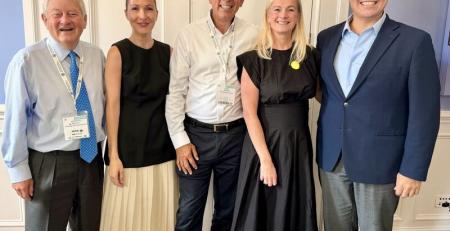
Our latest roundtable breakfast at the Ivy, hosted by CEO Melissa Davis and Global Head of Brand James Hayhurst, brought together senior leaders from across the sector for a lively discussion on what’s really shaping BD and client relationships now. One of the attendees, Daniel Chew, has kindly created a write-up of the event.
Daniel writes:
I recently attended a very enjoyable breakfast roundtable hosted by MD Communications, focused on a question every professional services firm should be asking:
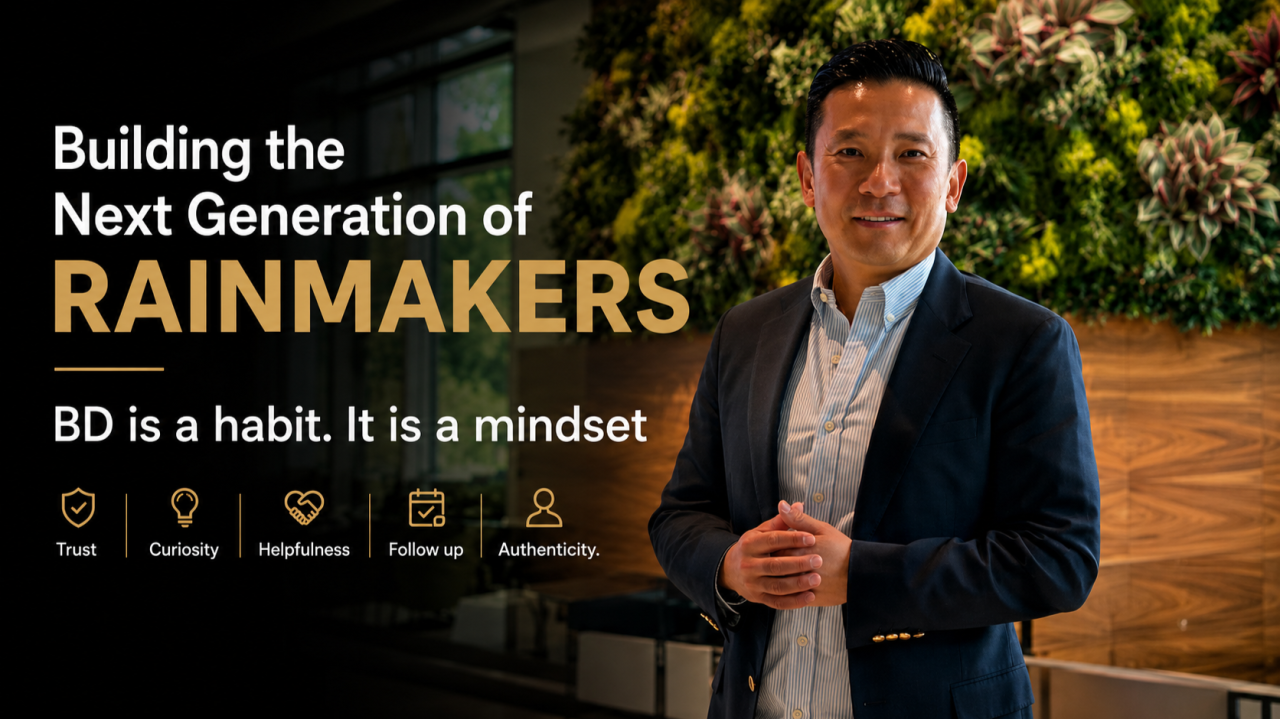
How do we develop the next generation of rainmakers?
The session was chaired by Melissa Davis, CEO of MD Communications, together with James Hayhurst, and brought together a small group of senior voices from across the legal sector, including partners, managing partners, and chief marketing officers.
What made the discussion valuable was that it focused on what actually works in practice.
The strongest theme for me was clear: business development in professional services is not really about selling.
It is about trust. It is about curiosity. It is about being helpful. It is about building relationships over time so that, when a need arises, you are the person someone naturally thinks of.
The best rainmakers are not necessarily the people with the slickest pitch. They are often the people who listen carefully, understand what others need, make useful introductions, follow up consistently, and show up in a way that feels genuine.
They are remembered not because they sold hard, but because they helped well.
BD is a habit
One of the key points from the discussion was that BD is not something lawyers should switch on only when work is needed.
BD is a habit. It is a mindset.
It is built through small actions repeated consistently: a thoughtful follow up, a useful introduction, a note when someone changes role, a genuine conversation, a willingness to listen before speaking.
These actions compound over time. Trust compounds. Familiarity compounds. Credibility compounds.
Most people we meet at conferences, roundtables, receptions, or sector events are not there because they are ready to buy legal services at that moment. They are learning who we are. They are deciding whether we are credible, interesting, generous, and trustworthy.
The work often comes later, when the need becomes real and the relationship is already there.
That is why in professional services transactional networking rarely (in my opinion, never) works. Professional services relationships are built long before the pitch.
Trust follows people
We also discussed whether client trust has changed over the years.
My own view is that trust remains the core currency of professional services. What has changed is the way it moves through the market.
When an in house counsel moves from one company to another, a trusted adviser may have an opportunity to build a relationship with the new organisation. But that opportunity exists only because trust has already been earned.
That also creates a risk for firms. If an important client relationship sits entirely with one partner, the firm is vulnerable. The stronger model is to embed teams into client relationships. Clients should know the wider team. Junior lawyers should be given opportunities to build credibility. Future rainmakers are developed by being brought into the room, not merely by being told about BD in a training session.
The next generation may network differently
A particularly interesting part of the discussion was how to motivate younger lawyers to engage with BD.
For many, the traditional image of networking can be off putting. It may be associated with formal receptions, forced conversations, late nights, or alcohol led relationship building.
The next generation may build relationships differently. They may start through shared interests, running groups, sector communities, WhatsApp groups, committees, online networks, LinkedIn conversations, or informal peer groups. That should not be dismissed. It may be where more authentic relationships are formed.
The fundamentals are still the same: be curious, be helpful, be consistent, follow up, stay visible, and build trust. But the setting may be different.
If we want younger lawyers to become confident business developers, we should not simply ask them to copy the style of a previous generation. We should help them find their own authentic way of building relationships.
Conferences should develop future rainmakers
We also discussed conferences.
At one stage, I was attending around eleven conferences a year. I have since reduced that number by around half, partly to create more opportunities for younger colleagues to attend, participate, and build their own networks.
Conferences should not be passive marketing trips or rewards for seniority. Used properly, they are training grounds for future rainmakers.
But sending someone to a conference is not enough. They need preparation before they go, support while they are there, and a follow up plan afterwards.
Committee involvement can also be powerful. It gives younger professionals a reason to contribute, meet people, and stay in regular contact. It turns networking into participation.
CRM discipline matters
The final practical theme was CRM.
Every firm knows the problem. People attend events, meet useful contacts, have promising conversations, and then fail to record the information properly. Without data, CRM does not work.
One phrase from the discussion stayed with me: “If it is not in the CRM, it has not been done.”
That may sound tough, but it is probably right. If a firm invests in conferences, events, sponsorships, and BD time, then the value needs to be captured. Contacts, notes, next steps, and follow up actions are not administration separate from BD. They are part of BD.
CRM is relationship infrastructure. It helps the firm remember, coordinate, follow up, and reduce reliance on any one individual.
Building a rainmaking culture
The real challenge is not simply to train a few charismatic individuals to win work. The real challenge is to build a culture where BD becomes a natural part of professional life.
That means making curiosity normal. Making follow up normal. Making introductions normal. Making junior involvement normal. Making CRM discipline normal.
Senior rainmakers have an important role to play. They need to share their judgement, open doors, involve others, and allow the next generation to learn by doing.
The point is not to create clones. The next generation of rainmakers do not need to network in the same places, speak in the same style, or build relationships in exactly the same way. But they do need to understand the principles that have always mattered: trust, curiosity, helpfulness, consistency, follow up, and authenticity. Methods will evolve, but those principles will not.
If we want to develop the next generation of rainmakers, we should start there.
Not by teaching them to sell harder. But by helping them build trust better.
Thank you to Melissa Davis, James Hayhurst and MD Communications for hosting such a thoughtful and practical discussion.
A huge thank you to Daniel for this thoughtful and considered summary and also to everyone who joined us and shared their insights so openly.
Read the original post on LinkedIn
Want to strengthen business development in your firm? Our Magic Sauce course, led by Global Head of Brand James Hayhurst, will help you work better with your clients.