Our Digital Director Emma Maule outlines the recent changes on LinkedIn and explains how to remain visible in 2026.
If LinkedIn has felt noisier or less rewarding over the past year, there’s a reason for that – and it’s also why 2026 is the year to reset how you use the platform.
LinkedIn has quietly rolled out a new large-scale AI ranking and recommendation system, known as 360Brew. This isn’t a minor tweak. It fundamentally changes how LinkedIn decides what content, people, and posts to surface.
Pivot your strategy
The key shift is simple: relevance now matters more than volume.
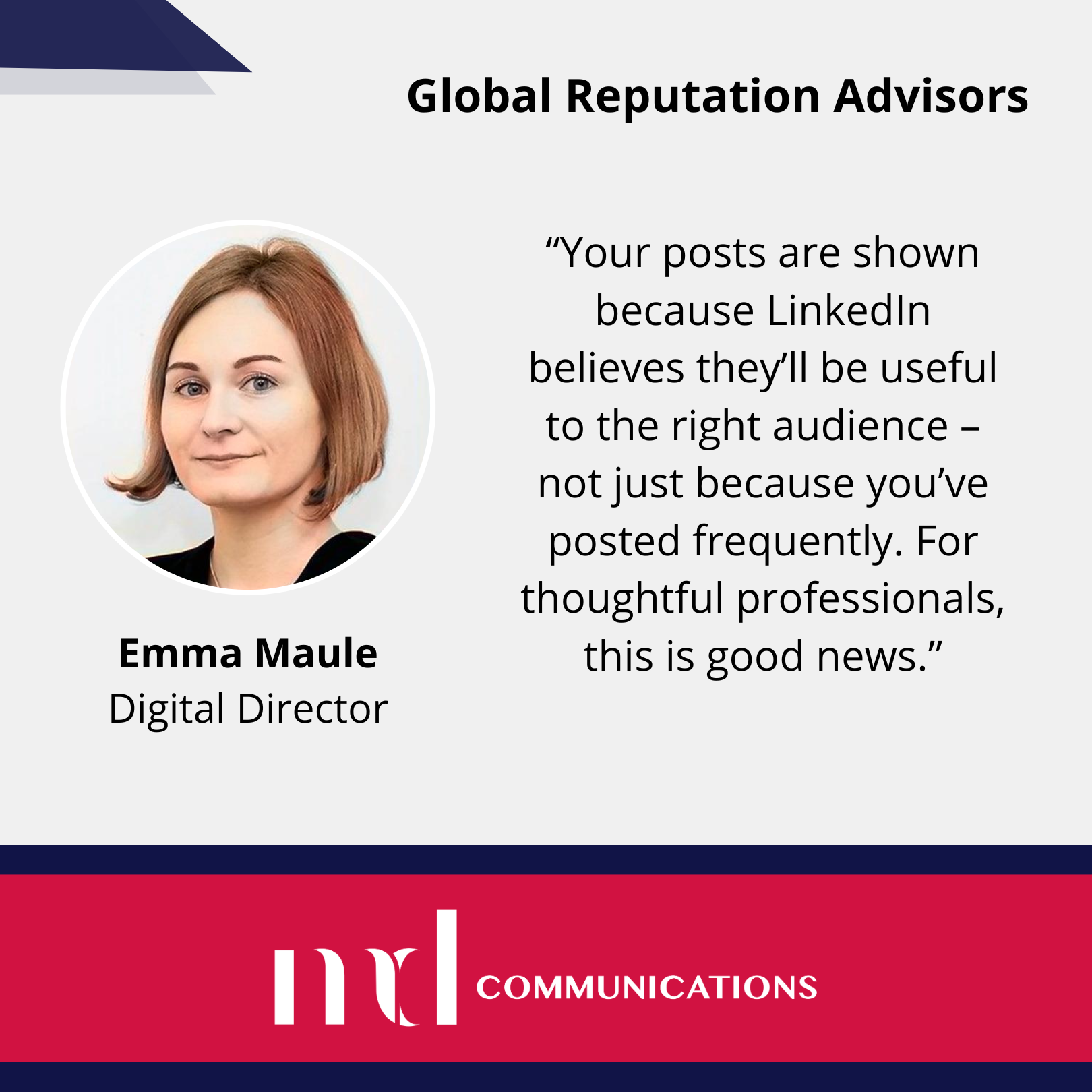
Your posts are shown because LinkedIn believes they’ll be useful to the right audience – not just because you’ve posted frequently. For thoughtful professionals, this is good news. It also means some long-standing LinkedIn habits are no longer working.
So, as you think about your LinkedIn strategy for 2026, here’s where to focus.
- Be useful, not performative
Chasing likes, copy-paste hooks, and engagement pods is becoming increasingly ineffective. LinkedIn now rewards clarity, credibility, and genuine value.
Before posting, ask yourself: Would this help someone understand something better? Write for an intelligent, non-specialist audience. Avoid over-claiming and jargon. Clear, grounded insight now travels further – and lasts longer.
- Decide what you want to be known for
Scattergun posting confuses both your audience and the algorithm. If you post about everything, LinkedIn won’t know where to place you.
Choose a small number of themes that reflect your expertise and priorities, and return to them consistently. A simple framework many teams use is:
- Your niche expertise
- Employer or firm brand
- A small amount of personal stories
You don’t need to post constantly. You do need to be coherent.
- Treat your profile as strategic, not static
Your profile plays a bigger role in visibility than many people realise. LinkedIn uses it to understand who you are, what you do, and who your content is relevant to.
Use clear keywords, real examples, and specific outcomes. Where possible, include third-party credibility – media coverage, speaking roles, legal directories quotes, testimonials or awards. Your profile should quietly reinforce what your posts are saying.
- Engage deliberately, not passively
Posting is only one signal. How you engage on LinkedIn now matters just as much as how much you post – you need to be an active member of the community.
Thoughtful comments, saves, reposts, profile views, and DMs all contribute to how LinkedIn understands your interests and relevance. Diverse, consistent engagement is far more effective than focusing on a single type of action.
In 2026, visibility comes from being an active participant, not just a broadcaster.
- Show your humanity with storytelling
With AI everywhere, the fastest way to stand out is simple: be human. Let your personality shine through. Authentic, experience-led content builds real connection because people engage with people, not faceless brands.
Move beyond overly polished corporate posts and start sharing real moments. That could be career milestones, lessons learned, personal insights, FAQs rooted in experience, or behind-the-scenes content that shows how the work actually gets done. This is what builds trust and credibility.
Storytelling is especially powerful. People are 22 times more likely to remember information when it’s told as a story. We’re wired to connect emotionally before we connect logically.
Your journey, motivations, challenges, pivots and influences all shape your perspective – and that perspective is your differentiator. Use it.
- Make advocacy collective
For those working in firms or teams, shared advocacy matters more than ever. Posts supported by genuine colleague engagement consistently perform better.
This isn’t about forced resharing. It’s about collaboration – agreeing themes, supporting each other’s expertise, and building credibility together. When advocacy feels authentic, reach follows naturally.
- Check out your new metrics
New metrics are being rolled out, so don’t miss the chance to see what’s working and what isn’t. Previously, for personal profiles, you could only see impressions and engagement.
Now, you can deep dive into members reached, profile views, followers gained, reposts, saves and sends, as well as reactions and comments. This indicates that LinkedIn is now paying more attention to more diverse forms of engagement.
You will also see a weekly sharing tracker within your analytics section for an overview. This is super helpful as it provides a range of actions each week for you to complete to boost your profile.
The bigger picture
LinkedIn is moving away from noise and towards usefulness. You don’t need tricks, templates or daily posting.
What you do need is clarity, consistency and confidence in your expertise. If you can add warmth or perspective along the way, even better.
That’s how to stay visible in 2026 – and how to stay credible.